
Clawdbot's sudden popularity raises suspicions of trademark squatting? Checklist for trademark protection(things to do within 7 days).

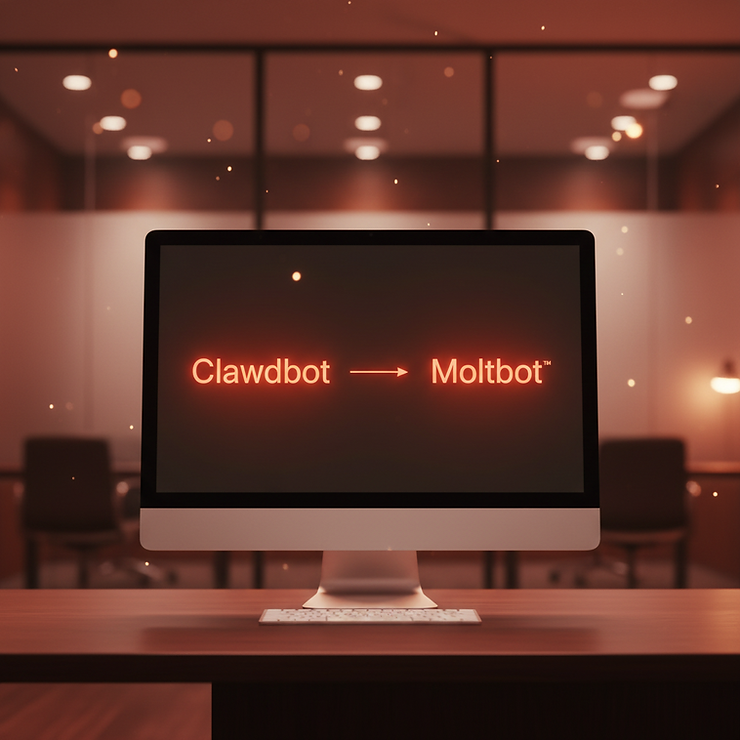
Recently, the open-source AI agent Clawdbot gained nearly 75,000 stars on GitHub in just a few days (and it's still growing), becoming a phenomenal project in the AI field. However, behind this sudden popularity lies a brand crisis: on January 27, founder Peter Steinberger announced that he was forced to change the name to Moltbot because he received a lawyer's letter from Anthropic, accusing "Clawdbot" of trademark infringement due to the similarity in pronunciation between "Clawdbot" and its product "Claude".
An outrageous incident occurred during the name change process: the old GitHub account "@clawdbot" was hacked by cryptocurrency scammers within 10 seconds of the name change and immediately used for blockchain fraud. Peter was forced to clarify on social media: "This is a non-profit amateur project. I will not issue any tokens. Any tokens named after me are scams." He lamented, "I released a free project, but people treated it like a business worth millions of dollars."
According to today's search results from the WIPO Global Brand Database, three trademark applications containing "clawdbot" have been found. Two of these applications are filed by Peter Steinberger (Austria), covering classes 9 and 42 in the European Union (EU), and are currently pending (January 14, 2026), with application numbers 019302891 and 019302933.
Another application, "CLAWDBOT AI," comes from Haijing He (USA), a U.S. National Application (USA), Category 9, currently pending (January 26, 2026), application number 99616327. This means that within just a few days of the project's viral success, other applicants have already attempted to seize this brand name in the U.S. market.

Imagine if these applicants weren't Peter himself, but malicious appropriators. Peter would be facing more than just a name change; he might also be sued for copyright infringement by these appropriators, leading to his product being removed from app stores.
Why are AI projects particularly vulnerable to such attacks?
Similar names can be risky: The media pointed out that the name Clawdbot is associated with "Claude," which could easily cause confusion and trademark concerns.
The speed at which your name goes viral is too fast: today it's trending on social media, and tomorrow someone will have already submitted an application. While you're still wondering whether to change your name, the market has already "claimed" it.
You haven't done trademark layout yet: Many teams develop products first and then do legal work; but in AI/SaaS, brands are often copied faster than features.
This tells us that when your product becomes popular, the whole world is eyeing your brand assets (trademark, account, domain). If you lag behind, someone else will get there first.
The most painful lesson learned: Register for a few thousand dollars first, then get back hundreds of thousands later.
Many entrepreneurs skip trademark registration in the early stages to "save money." However, the Clawdbot case, and the preemptive registration applications appearing on WIPO, starkly reveal a harsh reality in the business world:
Why is it necessary to "apply first"?
Because once someone else registers the trademark, the legal cost of reclaiming it is dozens of times the registration fee.
Trademark protection within 7 days
Day 1–2: Complete the search and risk assessment: WIPO can be used as a cross-regional starting point, and searches can be performed simultaneously with official databases in various regions (such as Hong Kong HKIPD and USPTO), because trademark availability and review depend on local standards.
Days 2–4: Decide on your application strategy: Don't wait until you're making money to apply. Before launching your product, at least secure your primary revenue location (e.g., Hong Kong, HK) and potential growth markets (e.g., the US, Mainland China, CN). Software/App categories typically fall under Class 9 (App/Software), Class 35 (Business Management), and Class 42 (SaaS/Technical Services).
Days 4–7: Monitoring and Evidence Preservation: Preserve evidence of brand usage for future dispute resolution. In case you do need to go to court to reclaim the trademark, you'll need to prove "I used it before them." Keep records of your website launches, contracts, invoices, exhibition photos, and media reports. This evidence can save you a significant amount on legal fees.
Peter Steinberger's prediction: The era of personal intelligent agents
In an interview, Peter shared the story of Moltbot's (formerly Clawdbot) creation. He predicted that personal agents would usher in an era of highly personalized software.
The new name Moltbot means "molting," symbolizing the painful molting process of a lobster during its growth. Although this name change controversy was painful, it also taught him (and all developers) a valuable lesson: in the AI era, branding is just as important as code, and even more difficult to replicate.
Further reading: Besides trademarks, there are also copyrights?
Besides trademarks, have you registered the copyrights or applied for design licenses for your project mascot, logo design, and even UI interface?
What to do when someone replicates your logo exactly?
Protection without registration? The myths and truths of copyright. Remember to follow us!
Don't want to spend a fortune on lawsuits? Apply for a trademark now!
Instead of spending hundreds of thousands in legal fees later to "redeem" your brand, invest a few thousand dollars now to protect it. Regeasy.hk specializes in Hong Kong and international trademark registration. We understand the pain points of entrepreneurs and provide professional search and strategy advice to help you spend your money wisely.
👉 Contact us now: +852 2810 6861
👉 Free trademark search: https://www.regeasy.hk


Comments